Skip to content

Cart

Your cart is empty

Jeremy-Goss-MG_0656

© Jeremy Goss for Big Life Foundation

Co-founded by photographer Nick Brandt, conservationist Richard Bonham and entrepreneur Tom Hill in 2010, Big Life Foundation's vision is to create a world where conservation supports the people, so that the people support conservation. 

Big Life's initial conservation priority was to establish a co-ordinated cross-boarder anti-poaching operation that strives to prevent the poaching of all wildlife in their area of operation, which is 2 million acres of wilderness in the Amboseli -Tsavo -Kilimanjaro ecosystem of East Africa. Their mission is boots on the ground, partnering with local communities to protect nature for the benefit of all. 

Since inception, poaching of all animals has dramatically declined and many wildlife populations are rebounding. Whilst stopping illegal wildlife crimes and arresting poachers is at the core of their operations other areas of program focus that are of critical conservation need are mitigating human-wildlife conflict and securing habitats.
Sheldrick Wildlife Trust - Baby Elephant Rescue

protecting wildlife

Anti-Poaching + Tracker Dogs


© Josh Clay for Big Life Foundation

Big Life strives to prevent poaching of all wildlife in their area of operation, including thousands of migrating elephants, big tuskers, a growing lion population and critically endangered Eastern black rhinos.

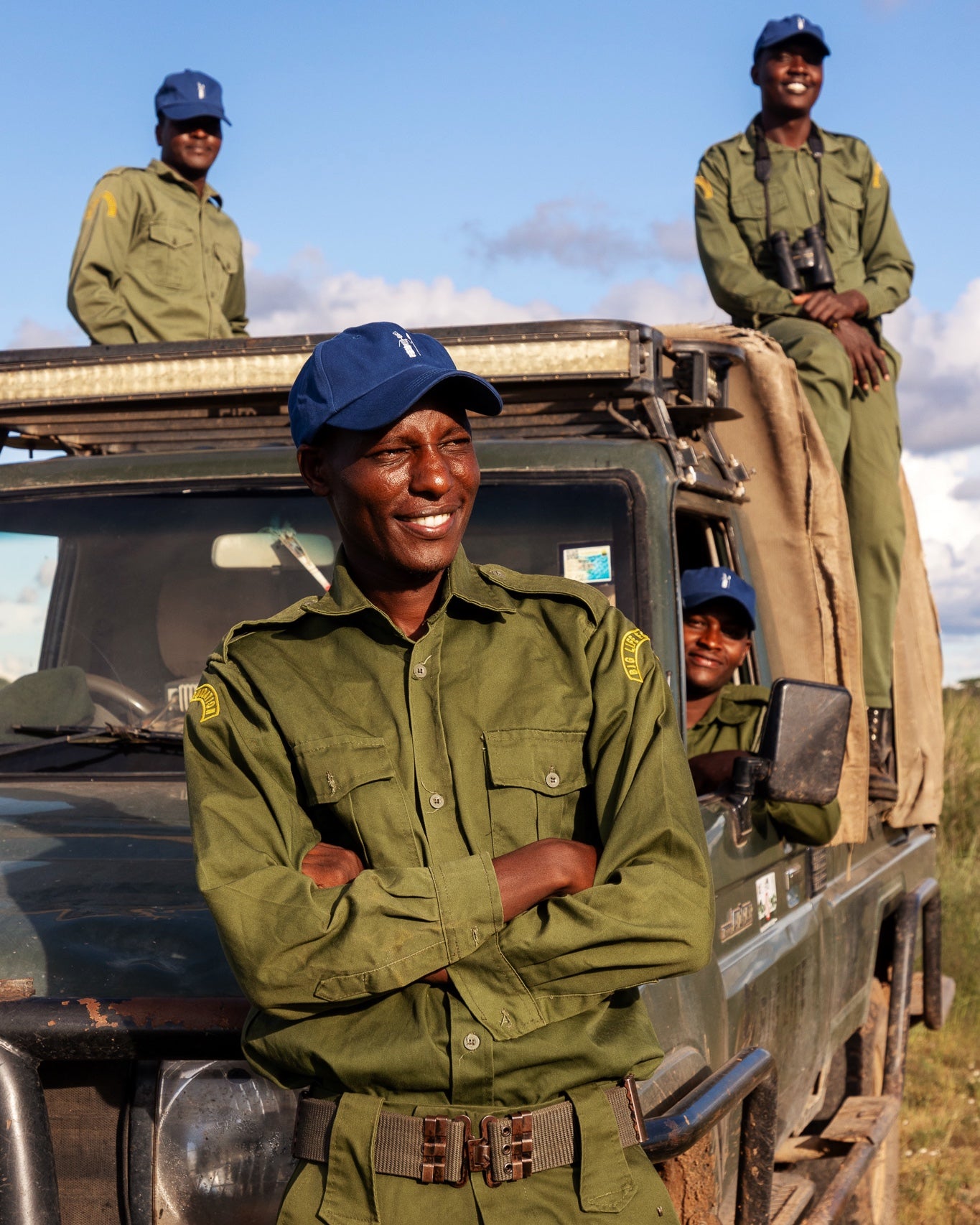
They employ 390 expertly trained rangers from the local Maasai community. Operating with 46 ranger patrols, 32 permanent outposts, 12 mobile units, 14 patrol units and 2 tracker dogs, these teams patrol daily. They are also supported in the skies by 2 aircrafts. During patrols rangers gather intelligence, detect and intercept illegal activities, monitor activity via hidden field cameras, use the latest night-vision with gps technology to thwart poachers and prevent habitat destruction. 

Big Life rangers are able to prevent most instances of poaching and successfully apprehend poachers when they do manage to kill. Their tracker dogs are instrumental in the capture of poachers as they can track and achieve results no human or machine can, as well as acting as a deterrent in the decision making of poachers. The dogs are also used to help apprehend local criminals and search for children lost in the bush which generates goodwill and support for conservation efforts.

Since 2011 Big Life rangers have patrolled 5,000 km, confiscated 6,000 weapons, arrested 5,000 suspects and 0 elephants have been poached since 2019.
Sheldrick Wildlife Trust - Baby Elephant Rescue

protecting wildlife

Wildlife Crime + 
Anti-Trafficking


© Jeremy Goss for Big Life Foundation

Big Life's initial conservation priority which continues to be a primary focus is to stop illegal wildlife crimes and arrest poachers.

Big Life works alongside Kenya Wildlife Services and has a vast network of informers from local communities to combat wildlife crimes and trafficking. Since 2016 the network has spread well beyond their area of operations and the team now helps Kenya Wildlife Services to make arrests as far north as Samburu and as far east as the Kenyan coast. Since 2015, Big Life has confiscated 5,000+ kgs of ivory, permanently removing it from the illegal wildlife trade. 

A crucial element to putting a stop to wildlife crime is Big Life's commitment to seeking justice for wildlife. They have a specialist prosecution officer who monitors all major wildlife court cases to ensure that criminals are punished to the fullest, and most appropriate, extent of the law. Court cases are supported by Big Life ensuring that all team witnesses and arresting officers attend the necessary hearings as well as working with the local prosecutors to improve the handling of wildlife cases.

Sheldrick Wildlife Trust - Baby Elephant Rescue

protecting wildlife

Rhino Protection


© Chester by Craig Miller for Big Life Foundation

There are eight known critically endangered Eastern black rhinos that spend most of their time in the densely-forested Chyulu Hills National Park. These rhinos are protected by a dedicated team of 63 specially trained Big Life rangers who form 10 dedicated rhino units operating out of 10 dedicated rhino outposts and 3 secured water points. Whilst using traditional tracking methods they also have 42 camera traps and monitor live sightings to maintain accurate records of all living rhinos in the rhino area, allowing them to raise red flags if a certain period of time lapses between recording specific individuals. 

Maintaining the area in which the rhinos live as an Intensive Protection Zone is of great importance. This is awarded by the Kenyan government for demonstrating that the rhino population can be effectively protected. This allows for future inbound translocation of rhinos from other territories in critical times. To ensure continued approval the Big Life team not only has to secure the rhinos safety, they have to provide infrastructure to the area such as roads, fencing and consistent water supply.

All anti-poaching and monitoring efforts are conducted in close partnership with Kenya Wildlife Services and 0 rhinos have been poached since 2016.

Sheldrick Wildlife Trust - Baby Elephant Rescue

predator compensation scheme. elephant management. Maasai olympics

Human-wildlife Conflict


© Jeremy Goss for Big Life Foundation

In order for the local community to support conservation, conservation must support the local community. 

That means mitigating the impact of human-wildlife conflict is an increasingly important area of operational focus. The Maasai are a traditionally pastoralist society, their wealth directly associated to their livestock. Retaliatory killings of predators that kill livestock in combination of an old tradition to hunt lions as a mark of bravery, prestige and manhood meant that 20 years ago the lion population in Amboseli was headed for extinction. In 2003 there were less than 10 lions that existed in a 300,000 acre region near Mt. Kilimanjaro. With a lion population on the brink of extinction, action had to be taken.

The solution was the Predator Compensation Scheme, to offset the impact of living with predators. Established in 2003 the scheme pays Maasai livestock owners varying levels of compensation for livestock killed by lions, leopards, cheetahs, hyenas and jackals on the condition that no predators are killed in retaliation. Big Life verification officers go to the scene to confirm all depredations and penalties to final compensation awarded will be made for poor animal husbandry. Fines are assessed and payments withheld if any predators are killed by members of participating communities. 

Recent droughts have led to weakened livestock herds, making them easier prey for predators and so the scale of implementation of the scheme far exceeds the original areas covered. After the scheme was introduced lion killings dropped by 90% almost immediately. It is vital for predator populations and the community that the scheme remains fully funded and can expand to areas in need. Thanks to the scheme and the support of lion conservation partners the 10 lions grew to over 200 and a one million acre corridor has been created for their safety, with this ecosystem being one of the few experiencing a lion population that is growing not declining. That being said, the habitat that once had 200,000 lions now only has 30,000 today.

Elephants are the other species that are greatly threatened by human-wildlife conflict. As the human population grows and encroaches onto what was wild land the competition for resources increases. Elephants are known to raid crops and damage water supplies, leaving a resentful community. To reduce these conflicts Big Life has constructed 100km of crop protection fencing with 32 fence maintenance workers to maintain functionality. Rangers also respond to any alerts of elephants on their way to farm land to chase them away as well as protecting water supplies.

The other way in which Big Life commits to reducing human-wildlife conflict is through the creation of the Maasai olympics which takes place every two years. The goal of this is to bring the community together and to build a new tradition of hunting for medals not lions. 
© Big Life Foundation - We are Big Life

© Big Life Foundation - The Battle Against Poaching

Securing Wildlife Habitats, Rangelands Management, 
Education + Healthcare

Protecting the remaining wild habitat areas in Big Life area of operation is an increasing program focus and critical conservation need. Two main ways to do this is working with local communities to protect land that is strategically important to wildlife movement corridors or dispersal areas but is also valuable to the local livestock economy as a grazing resource. Protection of these areas is established through conservancies and the management of them to help produce income generation opportunities such as tourism. The other way is paying annual leases to hundreds of 60-acre parcel land located in the Kimana corridor to limit the destructive development of land other that which is compatable with conservation and pastoralism.

Rangeland management is very important to protect habitats from overgrazing, to resolve this Big Life has helped establish a sustainable farming program with a grazing plan to manage livestock movements and improve the condition of existing pasture. Rangers also patrol these lands to protect against illegal logging or charcoaling and a carbon credit program with partners has been establish in the Chyulu Hills to protect against deforestation and overgrazing. The other resource rangers protect against is the illegal extraction of water, a precious resource in the bush as well as maintaining strategic waterholes and boreholes for wildlife and in water vulnerable areas of the ecosystem.

Finally, Big Life takes an active role in improving the well-being of their local communities to ensure that they are motivated to support continued conservation efforts. This is done through providing health care initiatives for rural communities and a supporting education. Since 2,000 Big Life has awarded nearly 3,000 scholarships to more than 2,000 children and pay for 8 teachers. 
Sheldrick Wildlife Trust - Baby Elephant Rescue


© Jeremey Goss for Big Life Foundation

Sheldrick Wildlife Trust - Baby Elephant Rescue


© Jeremy Goss for Big Life Foundation

Sheldrick Wildlife Trust - Baby Elephant Rescue


© Josh Clay for Big Life Foundation

Sheldrick Wildlife Trust - Baby Elephant Rescue


© Jeremy Goss for Big Life Foundation


Shop to stop wildlife crime

PP-DEBUG: Current path: /pages/big-life-foundation