











Skip to content

Cart

Your cart is empty

Screenshot-2026-02-27-at-11

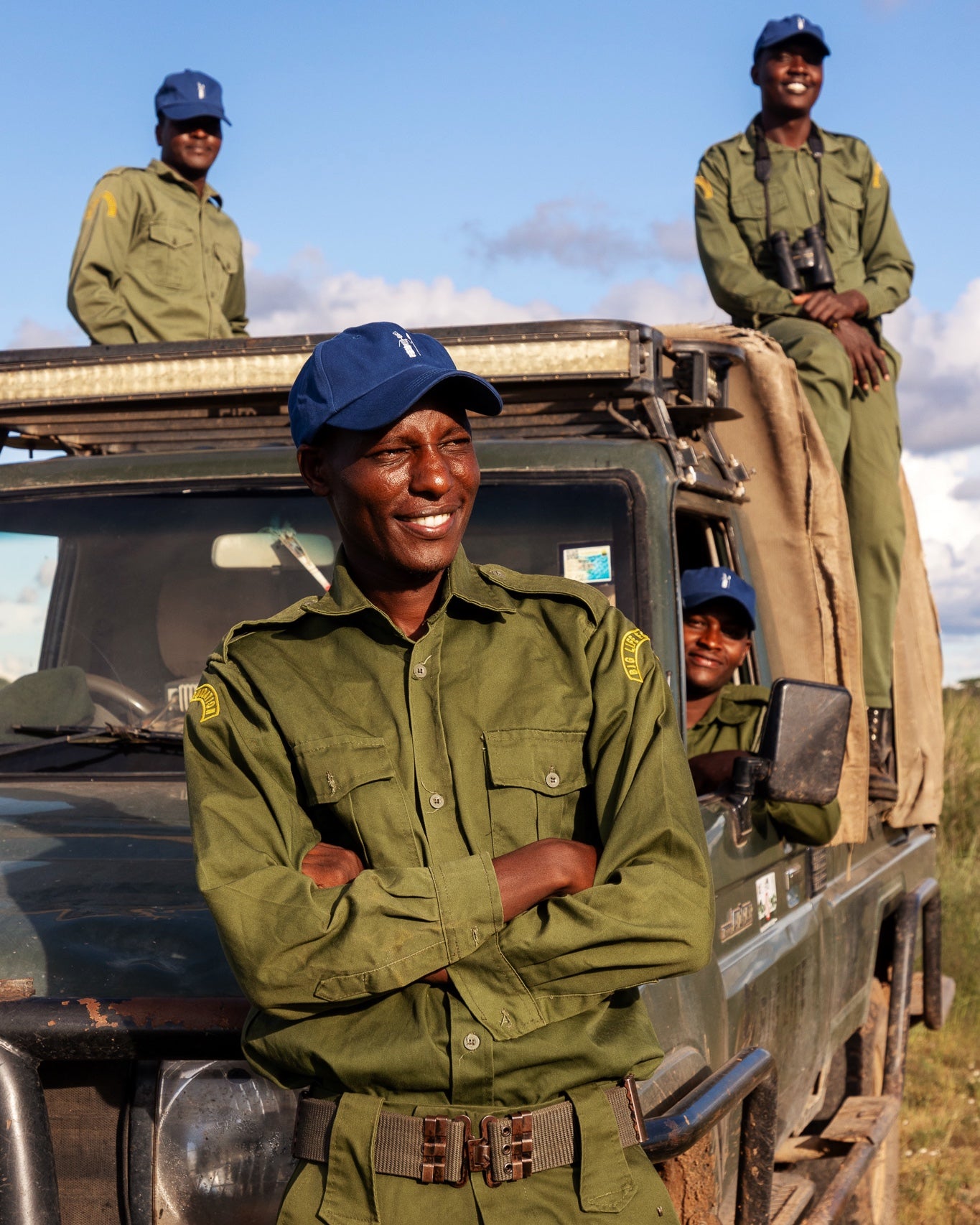
© Frank Petersens for Save The Elephants

Founded in 1993 by the late Dr. Iain Douglas-Hamilton, Save The Elephants works to secure a future for all elephants.

They are pioneers in the scientific research of elephants, using their insights into behaviours, family structures, intelligence and movements not only offer a rare window into the world of elephants, but act as a voice for their survival. Their research provides a foundational blueprint, guiding how to effectively implement further conservation projects, from how landscapes are planned to a practical toolbox of methods that can be applied at all levels to reduce human and wildlife conflict.

Over the decades they have recorded 900 elephants in Northern Kenya, their original research centre and have a secondary research centre in Tsavo. There collaring of elephants extends beyond these regions, with 500 elephants across Africa being monitored.
Sheldrick Wildlife Trust - Baby Elephant Rescue


Science


© Jane Wynyard for Save The Elephants

Elephants are increasingly facing conflicts with humans due to competition for resources. Development of human settlements, the overgrazing of livestock on wildlife areas and infrastructure such as roads lead to the fragmentation of elephants natural rangelands leaving them to live on disconnected land. There are three primary issues that this creates, the first is a loss of habitat and land to roam for food and water. Elephants will naturally continue to move and seek sustenance along their well established corridors and if blocked by human activity, there will be conflict. Understandably poor and struggling rural communities, are resentful and may use deadly force to defend their homes, crops and livestock or retaliate. The second is that is it not healthy for genetic diversity as the decreased movements reduces breeding opportunities. And the third is that unchecked livestock grazing eliminates grass, resulting in soil erosion and food insecurity, which fuels bush meat poaching.

As a keystone species to maintaining the ecosystems in which they live, the monitoring of collared elephants by Save The Elephants provides vital data to steer land development in an optimal way, allowing humans and elephants to co-exist peacefully. 
Sheldrick Wildlife Trust - Baby Elephant Rescue


Communication


© Benjamin Tissot for Save The Elephants

The scientific research of gps data, monitoring of movements and mapping of rangelands is of great importance to help protect wildlife corridors so that elephants can move freely without coming into conflict with humans. It also provides a sustainable framework for the urban and agricultural development of rural areas. Put into practise by using 30 years of tracking data, Save The Elephants has identified 10 key wildlife corridors in Northern Kenya with 7 of these being marked and patrolled to allow for the safe passage of elephants and other wildlife. 

Communicating with partners and using science to provide meaningful insights and recommendations to all areas of elephant conservation such as orphan projects and anti-poaching efforts is at the heart of Save The Elephants approach. As is, working with communities that live alongside elephants as long-term conservation solutions require the betterment of both humans and wildlife in order to succeed. With this in mind, Save The Elephants have supported 20,000 children with education and provided 359 scholarships, raising the next generation to understand, benefit from and become conservationists for their lands and wildlife.


Sheldrick Wildlife Trust - Baby Elephant Rescue


Impact


© Frank Petersens for Save The Elephants

To have consequential impact, Save The Elephants spent years developing a human-elephant co-existence toolbox providing a technical manual of advice and actions of all income levels so those facing conflict could take measures to reduce or eradicate. Over 1,400 communities are empowered with the help of the toolbox to choose tailored interventions that suit their specific needs, circumstances, budget and complexity.

One of the actions provided is bee hive fencing which was developed by the Save The Elephants team testing a folklore that elephants are scared of bees. After implementing and monitoring, it was found that bee fencing has an 80% success rate of deterring crop raiding elephants. As of 2024 14,000 bee hive fences have been implemented.

Save The Elephants also had no recorded incidents of elephant poaching in 2022 in the Samburu-Lakipia region for the first time in two decades. Highlighting how a community led approach, for the benefit of humans and wildlife, with scientific data to guide solutions is providing a hopeful future where efforts are rewarded with positive results.


© need a high resolution video of elephant collaring or elephants visiting where the collars are - story telling is how the collars allow for research data to guide landscape policies etc

© need a high resolution of one of the herds such as Royal / Harwoods to tell the story of how STE knows these families history, behaviours etc from decades of research

The Elephant Crisis Fund

Save The Elephants has also been at the forefront of combating the illegal ivory trade. A census by Ian Douglas-Hamilton in 1989 revealed Africa lost half of its population to poaching. In response Kenya authorities burnt their stock piles and a global CITES (Convention on International Trade in Endangered Species) ban was imposed, allowing the population to recover, before a second wave of poaching was reignited in 2008 due to a legal ivory sale to China. In response Save The Elephants, along with The Wildlife Conservation Network launched the Elephant Crisis Fund to help prevent the ivory crisis by ensuring elephants are no longer under threat.

The fund supports front line partners to stop poaching, end ivory trafficking and protect habitats. It has awarded $36.34 million in 489 grants to 114 partners in 44 countries in efforts to safeguard the future for elephants.
Sheldrick Wildlife Trust - Baby Elephant Rescue


© Oria Douglas Hamilton

Sheldrick Wildlife Trust - Baby Elephant Rescue


© STE ivory burn photo?

Sheldrick Wildlife Trust - Baby Elephant Rescue


© Frank Petersens for Save The Elephants

Sheldrick Wildlife Trust - Baby Elephant Rescue


© Jane Wynyard for Save The Elephants


Shop to save African elephants

PP-DEBUG: Current path: /pages/save-the-elephants